Judges scare solicitors.
Ms. Solicitrix Eunice Collins wrote an article about suing at the Judicial-Conduct Committee but she does not sue at the Judicial-Conduct Committee! Cf. HTTPS://Gloucester.Insomnia247.NL/gardai/Where_are_you_from/2026-03-27f_Take_care_said_Eunice_Collins.wma This article is Eunice Collins, ‘THE DEFINITION OF JUDICIAL MISCONDUCT IN THE JUDICIAL COUNCIL ACT 2019’ (2022) 6 Irish Judicial Studies Journal 69, HTTPS://JudicialStudiesJournal.Ie/assets/uploads/documents/5.%20Eunice%20Collins%20Final.pdf
D. R. Pigot & Co. is a law firm. It refuses to prosecute judges. Cf. this conversation on 20/04/2026 . . .
I myself: I'm interested in becoming a client.
D. R. Pigot & Co.: About to do with what?
I myself: Em. So I'm interested in using the Judicial-Council Act two thousand and nineteen at the Judicial-Conduct Committee against a judge.
D. R. Pigot & Co.: OK. Not interested. Alright.
I myself: Em. But you are listed on the Negligence Panel.
D. R. Pigot & Co.: Eh. Not for against judges. No. Against solicitors. OK.
I myself: Can you recommend who I can instruct?
D. R. Pigot & Co.: No. I can't. No.
I myself: Too bad. Bye.
D. R. Pigot & Co.: OK. Bye.
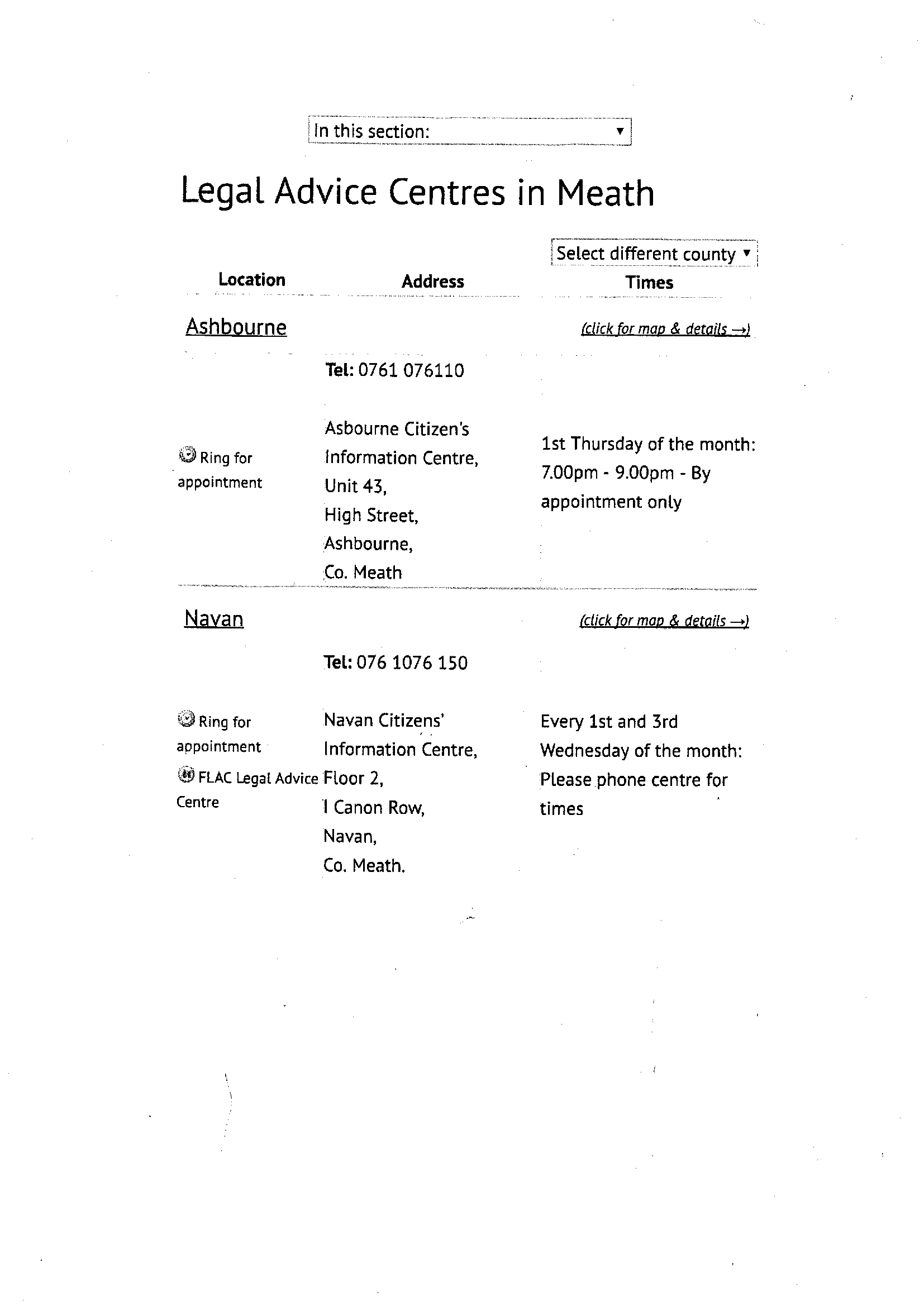
A Free-Legal-Advice Centre (FLAC) adivsed me on 15/04/2026.
A Free-Legal-Advice Centre: Hello. This is the Free-Legal-Advice phone clinic here.
I myself: Hi. Thanks a lot for calling.
A Free-Legal-Advice Centre: Hi ya. Hello. How can I help you?
I myself: Eh. So. Unfortunately eh I'm a victim of many crimes eh so I I myself eh without a solicitor went to a police station to complain about crimes. Em. I started this conversation in Irish. A policeman eh did not eh recognise that I was speaking in Irish. I can appreciate that a a policeman might not understand what I was saying in Irish but he didn't even recognise that I was speaking in Irish. He asked me quote Where are you from [. . .]? unquote and quote Where were you born? [I regret that I failed to quote perfectly verbatim to this solicitor: a perfectly verbatim quotation is instead: "Were you born here?"] unquote and eh he said
A Free-Legal-Advice Centre: What difference does that make? Sorry. [This solicitor laughed.]
I myself: And eh. Exactly. And he eh eh he said quote Get out of my station unquote. He eh assaulted me twice in front of a CCTV camera. Eh. Fiosrú eh has declared to me that eh a complaint by me about this policeman is admissible meaning that eh Fiosrú eh will have performed an investigation. Em. [Mark Kelly publishes about Fiosrú.]
A Free-Legal-Advice Centre: Are they — sorry to interrupt you — is it like GSOC? The
I myself: [. . .] the new thing after GSOC. Yes.
A Free-Legal-Advice Centre: Yeah. The new one. I know. Yeah.
I myself: Alright. And eh. Em. So I eh attempted to find eh a private-eh-criminal-prosecution solicitor or solicitrix but [. . . .] the search engine of this Law Society is not very good. Eh. For example if you search for
criminal
eh on its solicitor directory it shows only about eight results and they are mainly
A Free-Legal-Advice Centre: [. . .] and it only really is geared towards an individual solicitor's name more than anything. I I have noticed that.
I myself: Yes. Exactly. And em so eh I was eh I was finding great difficulty to find eh a suitable lawyer to instruct so I bought eh a book on performing private criminal prosecutions. I read the the I read the entire thing. It's called [ISBN 978-1-906628-73-4, CheckPoint Press, 2016] D.I.Y. JUSTICE IN IRELAND: Prosecuting by Common Informer by Doctor Stephen T Manning. It is a very good book, because I mean I've read it and it it cites statutes which I have checked and they they really do say eh blah blah blah and em so I eh I myself eh brought a claim to a district court as as per the Petty-Sessions-(Ireland) Act eighteen fifty-one and eh
A Free-Legal-Advice Centre: So in other words you didn't go it wasn't the D.P.P.[Directrix of Public Prosecutions]. It was in suit of yourself. Not in the suit of the DPP that that you you prosecuted the guard.
I myself: Eh well it is possible that the DPP is also doing it but I do not know. I did
A Free-Legal-Advice Centre: Yeah.
I myself: I did I did ask Fiosrú em ha has it actually recommended to the DPP to prosecute but unfortunately I did not get an answer to this question and I did not want a time bar to
A Free-Legal-Advice Centre: Was was it eh a nineteen ninety-seven Offences [. . .] Act? Is it? Was it one of those sections that you brought [. . .]?
I myself: Yes. So I mean. Yes. So I mean it's
A Free-Legal-Advice Centre: Is it is it the minor assault or the assault causing harm?
I myself: Eh minor assault but al but it does have a background that I eh actu I am a victim of crimes going to this police station because I am actually a victim of torture and the European Committee for the Prevention of Torture eh visited me in torture chambers and it repeatedly criticises violations of international law against me, and anti-torture anti-torture statutes provide no legal discretion whatsoever to refuse to prosecute eh against torture, em but unfortunately eh eh as em as a litigant in person possibly without the D.P.P. em I eh went eh I I was scheduled to meet em a district-court judge to em attempt to get her to sign a su a summons against this eh policeman and summonses against criminals eh against whom I had attempted to complain to this policeman, and eh, this, eh this hearing lasted barely a minute. Em. I spoke only in Irish. This judge spoke only in English without an interpreter. Eh. She eh an-and I wrote on these forms in Irish eh but eh this eh judge clearly does not understand Irish. Em eh and for example I said the Irish eh preposition "uaim" eh but she thought that I said "afternoon" so she said "Yeah. Good afternoon." Em. So she clear clearly didn't understand eh wha what I what em what are at stake, what are involved, and eh she lied that she considered eh the the summonses and that she believes that there is no basis in law to sign them therefore she refuses to sign them and I asked her in Irish why and she em refuses to explain so she is also violating eh data-protection uh the data-subject-access-request legislation. So em n[. . .] I I need to prosecute this policeman eh in in a criminal process and I also need to eh sue this judge at the Judicial-eh-Conduct Committee via the Judicial-Council Act two thousand and nineteen.
A Free-Legal-Advice Centre: Oh yeah. I think that's where you make an online application make a complaint. Sorry.
I myself: Em so yes. I I do want to eh make eh a complaint, em but eh I have not found any eh lawyer who has ever actually sued at the Judicial-Conduct Committee and eh this is not going to be easy to find such a person un-unless you can do it for me, and em I've I've been I've read from the annual reports of eh the Judicial Council that eh there have been eh hundreds of complaints eh to the Judicial-Conduct Committee and only one was ever declared to be admissible but it does not publish ah information about this admissible complaint so I do not know if a solicitor eh does it did it and I don't know the identity of this solicitor if it was even a solicitor. So eh I
A Free-Legal-Advice Centre: Yeah
I myself: I really need
A Free-Legal-Advice Centre: and I could hazard, I could hazard I could hazard a guess and maybe many solicitors don't want to because, yeah, I suppose they don't want to they don't want to cut off the hand that feeds them if something goes wrong with a judge.
I myself: Exactly.
A Free-Legal-Advice Centre: Em. [. . .] certain areas of advice. We don't I couldn't [. . .] any solicitor's name. I'm just going to go back. You said. I know the Law Society directly myself, very well, but have you actually tried emailing them directly and asking them for a solicitor to help you?
I myself: So, em. So I I did actually eh visit em a a firm and eh it said to me that un-unfortunately many different illegalities are involved and that it does not work on all of those illegalities and it takes an all-or-nothing approach saying that I have to find some other firm to instruct but the only firm that it actually identified to me to attempt to instruct said to me that it doesn't know why this first firm suggested [. . .] second firm, that it that's not what this second firm does, and and this first firm also suggested to go to the Law Society to ask it to identify whom to instruct. So I went to this Law Society but it[. . .]told me that every day loads of persons come in requesting eh [. . .] for lawyers to be identified to be instructed but that a ru a rule of the Law Society eh forbids
A Free-Legal-Advice Centre: Can't favour one nor the other.
I myself: Basically yes.
A Free-Legal-Advice Centre: [. . .] another way I would suggest would be to go to your local district court when it sits and then you could see all the District Court's criminal solicitors and maybe approach them privately.
I myself: Right so em. Well I I get the impression that eh they are cri criminal-defence eh solicitors.
A Free-Legal-Advice Centre: Yeah I I know what you're saying: rather than prosecution, but at the end of the day the surely they would know the flip side if somebody else ever prosecuted. I know it's unusual. [. . .] I'm sure they would flip it for a criminal case as well.
I myself: Em well I [. . .] actually em I dare to contradict that point about eh criminal-prosecution solicitors being [. . .] being unusual as they are not. They are unusual in this jurisdiction.
A Free-Legal-Advice Centre: That's what I meant to say. Well an easier-to-find one. Sorry.
I myself: Yes. Well well [. . .] yeah well I agree that's basically the same thing but I mean [. . .] I mean I migrated to Ireland and eh I migrated from a country where it is easy to eh get eh private-criminal-prosecution advocates but unfortunately eh things are are not so easy here, but as for as for finding em as for finding eh solicitors at the the local District Court I mean I have actually gone into it and I have tried [. . .] to speak to solicitors there but but eh but they eh do not engage with me. There there there are signs throughout this courthouse warning solicitors that it is illegal to solicit eh from persons.
A Free-Legal-Advice Centre: Yes. It's illegal for them to solicit, but it's not illegal for you to approach them.
I myself: Well eh even if well even if this is not so I find that they that they refuse to h[. . .] engage in this type of conversation. Em. I mean
A Free-Legal-Advice Centre: [. . .] I'm just trying to suggest. [. . .] This is free legal advice. This isn't a directory but what I'm trying to say to you is [. . .] Would they I wonder would they possibly take on a case like this?
I myself: So em I mean I am actually civilly prosecuting eh this policeman in eh two eh eh cases eh over the over identical facts em with a private eh civil
A Free-Legal-Advice Centre: [. . .] So you have three cases
I myself: [. . .] Workplace-Relations Commission [. . .] this High Court and eh
A Free-Legal-Advice Centre: [. . .] you'll be prosecuting that yourself.
I myself: [. . .] but through lawyers whom I've already eh paid and instructed [. . .] but they are not eh criminal-prosecution lawyers. And em
A Free-Legal-Advice Centre: Yeah.
I myself: did did I understand from an earlier part of this conversation that you are not allowed to identify yourself to me?
A Free-Legal-Advice Centre: No. Sorry. We're not.
I myself: So [. . .]
A Free-Legal-Advice Centre: We're a volunteer service.
I myself: Right but em, I mean does this mean that it it's impossible for me eh to privately instruct you?
A Free-Legal-Advice Centre: Oh God definitely yeah! No. [. . .] We don't take on any of this. We're just a free-legal-advice. It's more a free-legal-advice clinic rather than a directory and and I I get your point now you're looking for a specific firm or a specific solicitor [. . .] that's definitely not something I can help you with.
I myself: Em. So you're not able to like even name the firm that you work for or anyone whom you know.
A Free-Legal-Advice Centre: Oh God no. [. . .]
I myself: Oh dear. Well eh. Wow. This is eh really em an unexpected rule that you have but if that's the rule that's the rule. Em.
A Free-Legal-Advice Centre: Yeah. Yeah.
I myself: Right so.
[. . .]
I myself: Sorry. Say that again.
[. . .]
I myself: [. . .] this seems to me to fall under judicial misconduct that eh she eh completely refused to inform me even though I repeatedly asked made
A Free-Legal-Advice Centre: Yeah.
I myself: a data-subject-access request to her. So I need to
A Free-Legal-Advice Centre: You. That's that's a very good point. You're weren't advised you weren't informed on the day that she refused it but you weren't informed on the day that you had only fourteen days to appeal. You probably should have been advised of that.
I myself: Right. Eh. Thanks thanks very much. [. . .]
[. . .]
A Free-Legal-Advice Centre: [. . .] if that's unsuccessful, judicial review that's possibly but again you would need to consult a solicitor for that, privately obviously, [. . .] as we're only the free-legal-advice solicitors we we couldn't obviously take on a case for ye. Well we don't. We're only volunteers[. . .]
[. . .]
I myself: [. . .] it seems a bit strange that you are not allowed to identify eh the firm you work for [. . .]
A Free-Legal-Advice Centre: [. . .] We're just volunteers. [. . .]
[. . .]
A Free-Legal-Advice Centre: OK.
I myself: Heh. Not really but at least but at least I'm I'm eh less ignorant of the the situation than I am than I used to be but eh still it's eh I am in a very eh heh heh difficult situation and [. . .]
A Free-Legal-Advice Centre: You are[. . .] I wouldn't give up and I would I would keep pursuing it [. . .]
[. . .]
A Free-Legal-Advice Centre: Take care. Bye.
I myself: Take care. Bye.
It is too difficult to identify a solicitor. Cf. 2026-04-22m_FLAC_refuses_to_identify_a_solicitor.wma and 2026-04-16d_Citizens_Information_will_attempt_to_inform_me_de_solicitor_name.wma and 2026-04-16o_Brenda_Scott_de_Citizens_Information_rang_me_back.wma and 2026-04-16s_Brenda_Scott_de_Citizens_Information_rang_me_back_again.wma and 2026-04-02h_Brenda_Scott_de_Citizens_Information_rang_me.wma and 2026-04-27i_voicemail_to_Citizens_Information_in_Navan_about_FLAC.wma and 2026-04-16b_failed_to_ring_FLAC.wma and HTTPS://Gloucester.Insomnia247.NL/gardai/Where_are_you_from/ etc.
Law Firm Hanahoe & Hanahoe LLP misleadingly advertised: "Hanahoe & Hanahoe LLP is solution based in all areas of the law." It made a confession to me that it does not really work in all the areas of the laws. It does not prosecute judges. Cf. HTTPS://Gloucester.Insomnia247.NL/gardai/Where_are_you_from/2026-03-31b_telephone_talk_with_Hanahoe_and_Hanahoe.wma
Law Firm Thomas Loomes & Co. spoke to myself.
Thomas Loomes: Hello. This is Tom Loomes here.
[. . .]
I myself: So em I eh found out about you
[. . .]
I myself: [. . .] I'm convinced that eh she eh is not eh treating this matter eh appropriately and seriously eh so I eh am asking are you to instruct against her eh via the Judicial-Council Act two thousand and nineteen at the Judicial-Conduct Committee. Is this possible?
[. . .]
Thomas Loomes: It won't work.
[. . .]
I myself: [. . .] I am a private criminal prosecutor, and she refuses to sign forms for
Thomas Loomes: Sorry. You're a private criminal prosecutor.
I myself: Yes. A common informer.
Thomas Loomes: Yeah.
I myself: And she she refuses to form to sign eh summonses against criminals and eh clearly she has to understand the the forms in order to to deter-determine that
Thomas Loomes: Well hold on a second now. How how are you a private prosecutor? What is your locus standi to be able to prosecute somebody?
I myself: Eh. Under eh the Petty-Sessions-(Ireland) Act eighteen fifty-one any person is allowed to bring a criminal prosecution including a private individual and this is alre, this is upheld eh by the Supreme Court, for example in a two-thousand-and-fifteen ruling which I had a copy of when I was speaking to her but she refuses to look at it and numerous other documents [. . .] I was asking her to sign eh a summons against a policeman eh against whom Fiosrú has confirmed I have a valid complaint and eh against whom I eh am suing via civil eh lawyers over assaults and discrimination eh at this High Court and at this Workplace-Relations Commission. [. . .]
Thomas Loomes: Not interested. Sorry.
[. . .]
Thomas Loomes: I don't believe you can win that. I certainly do not believe.
[. . .]
Thomas Loomes: Well the cost involved in this is going to be huge.
I myself: Definitely. Definitely. Yes.
Thomas Loomes: And it'll be all paid upfront.
[. . .]
I myself: So the Petty-Sessions-(Ireland) Act eighteen fifty-one.
[. . .]
Thomas Loomes: [. . .] You're talking about a private people private person prosecuting people.
I myself: Yes.
Thomas Loomes: Like for what?
I myself: Eh so he perpetrated assaults against me in front of a CCTV camera, eh, and he also perverts the course of justice.
[. . .]
Thomas Loomes: [. . .] I don't believe you can prosecute anyway. I'm not interested.
[. . .]
I myself: Em. Well I mean there is a Supreme-Court ruling from two thousand and fifteen confirming this.
Thomas Loomes: Try. Try the Supreme Court today. I'll try it.
I myself: How do you mean? Will I? Em. Should I ring up a particular person in the Supreme Court to ask about it?
Thomas Loomes: No. Don't be ridiculous! You don't ring Supreme-Court judges!
I myself: Sorry. I didn't I didn't I didn't really understand what you said then. Em.
Thomas Loomes: You. Hold on. Uh. You don't ring Suprem Supreme-Court judges!
I myself: OK but I I thought you said to try the Supreme Court.
Thomas Loomes: Well you'll have to check but ya you'll have to check the judgments.
I myself: I I did. I mean I I have read it. Eh. I I brought it with me to this judge but she refused to look at it.
Thomas Loomes: I'm sure she did. I've no doubt about it.
I myself: Em. So I mean how is this not judicial misconduct if she ignores precedents
Thomas Loomes: Judicial misconduct. [. . .] Anyway. I have no interest. Sorry about that.
I myself: Bye then.
"For every expert there is an equal and opposite expert." says a proverb by Charles Hoy Fort, as Fortean Times republishes. Cf.
James MacGuill: James MacGuill here.
[. . .]
James MacGuill: [. . .] I wouldn't be able to act. I mean I know her too well.
I myself: So. Is that eh like a conflict of interests or?
James MacGuill: Exactly.
I myself: Oh dear oh dear [. . .]
[. . .]
James MacGuill: [. . .] Éirinn McKiernan did sit in Louth for a long time and then moved over to Meath. [. . .]
[. . .]
James MacGuill: [. . .] You'll not get any lawyer in Louth or Meath that will act. So. Better to go to to a different county or a to the city.
I myself: Well. Thanks for this eh frankness. [. . .]
[. . .]
I myself: Can you name any specific eh firms I could try?
James MacGuill: I can't . . . really. You know.
I myself: Well. Ah well. Eh. That's life. Well. Eh. Thanks for letting me know. Is there any more to say?
James MacGuill: No. Slán.
I myself: No. Thanks. Bye.
Law Firm Liam Lysaght & Co. warned that a law firm can fob a victim off.
One may also consider an evaluation by a client.
Lawyers deliberately underperform.
Putative advocates deliberately underperform. Cf. reports by the CPT.
Psychiatrists prove that I am never crazy, but a putative legal-aid advocate who never visits me who does not speak a lingua franca who never meets me during a court case who had never attempted to communicate with me during a show trial connives at a court order to torture me via psychiatric quacks at putatative Hospital Sobral Cid (of the fake University of Coimbra) during 2013, to illegally, dishonestly discredit whistleblowing by me (a victim of inter alia human trafficking; enslavement; persecution; discrimination; extermination; harassment; and subventions frauds).
"Report to the Portuguese Government
on the visit to Portugal
carried out by the European Committee
for the Prevention of Torture and Inhuman
or Degrading Treatment or Punishment (CPT) [. . .]
134. The legal provisions of the Mental Health Act relevant to the involuntary placement and
discharge of a patient in a psychiatric hospital have been described previously by the CPT.63 The
Committee in particular welcomes the fact that throughout both the placement and discharge
procedures, a patient has the statutory right of access to a lawyer. However, in the course of the
2008 visit, both patients and health-care staff frequently stated that, in practice, few patients could
rely on meaningful support from a lawyer. The lack of legal assistance significantly compromises
the effectiveness of this legal safeguard. Similar remarks were made by the CPT in the report on the
1999 visit to Portugal. The CPT recommends that steps be taken to ensure, in practice, the
effectiveness of the right of access to a lawyer, in the context of involuntary placement under
the Mental Health Act.
135. Where a patient is involuntarily placed in a psychiatric hospital following the emergency
procedure under Section IV of the Mental Health Act, judicial confirmation of the detention must
follow within 48 hours from the moment of the placement64. However, the delegation was told that,
in practice, if a patient has already consented to voluntary admission before the judicial scrutiny
could take place, the judicial procedure will be abandoned (even if the patient has already received
involuntary treatment). The CPT considers that this practice deprives patients of an important legal
safeguard and opens the door to abuse. The CPT recommends that in all cases where a patient is
involuntarily placed in a psychiatric hospital under Section IV of the Mental Health Act, the
process of judicial scrutiny of the placement as indicated in Article 26 (2) of the Mental
Health Act be completed.
b. consent to treatment
136. In the report on the 199965 visit, the CPT expressed concern that the Mental Health Act does
not require involuntary patients to give their consent to treatment66. Similar remarks were made in
the report on the 2003 visit to Portugal with respect to the treatment of patients involuntarily
hospitalised under the Criminal Code67.
With reference to the responses received to date from the Portuguese authorities on this
subject, the CPT fully accepts that the requirement of consent to treatment does not arise vis-à-vis a
person suffering from a mental illness for as long as she/he lacks the necessary discernment to give
such consent68. However, many - if not the majority of - patients involuntarily placed under the
Mental Health Act, or Criminal Code, will have the necessary discernment to give or to refuse
consent to treatment. Article 12 (1) of the Mental Health Act should not be interpreted by healthcare staff as providing them with a mandate to treat such patients without their consent.
Once again, the CPT wishes to stress that psychiatric patients should, as a matter of principle,
be placed in a position to give their free and informed consent to treatment. The admission of a person
to a psychiatric establishment on an involuntary basis - be it in the context of civil or criminal
proceedings - should not preclude seeking informed consent to treatment. Every competent patient,
whether voluntary or involuntary, should be fully informed about the treatment which it is intended to
prescribe and be given the opportunity to refuse treatment or any other medical intervention. Any
derogation from this fundamental principle should be based upon law and only relate to clearly and
strictly defined exceptional circumstances.
The CPT calls upon the Portuguese authorities to review the relevant legislation in the
light of the remarks above.
[. . .]
Safeguards
recommendations
- steps to be taken to ensure, in practice, the effectiveness of the right of access to a lawyer, in
the context of involuntary placement under the Mental Health Act (paragraph 134);" says the Council of Europe.
from 14 to 25 January 2008
"Dear Taryn TAYLOR, Charity Ekō emailed me complaining about Palantir. This webpage does not list all its petitions: HTTPS://Eko.org/en/campaigns
"my medical records being falsified [. . .] physically assaulting me [. . .] being threatened by Police.
[. . .]
[. . .]
[. . .] tried to save [. . .] patients, [ . .]
[. . .]
The primary tactic being to destroy your reputation and credibility [. . .]
My life was put at risk multiple times [. . .]
I somehow managed to survive when sadly many don't." said Mister Allister F. truly - I empathise!" say I myself via LinkedIn since 4th May 2026.
"Report [. . .]
The report further comments on fundamental safeguards against ill-treatment, i.e. the right of
notification of custody to a trusted person and the rights of access to a lawyer and doctor. In this
context, the CPT is particularly concerned that once again the majority of persons interviewed stated
that they only met an ex officio lawyer at the court hearing before a judge. The CPT therefore
reiterates that all persons detained by the police should have the right of access to a lawyer as from
the very outset of the deprivation of liberty. Further, there is a need to enhance detainees’
possibilities for access to a doctor, and to translation and interpretation services in case they do not
have a good command of Portuguese.
[. . .]
14. By means of example, the CPT wishes to highlight the following four cases of alleged
ill-treatment.
i. A man met by the delegation in the Judicial Police Prison in Lisbon on 25 May 2022 alleged
that, on the evening of 1 April 2022, he was punched in the face by two officers from a GNR
station in Sintra, after he had refused to allow his car to be searched and asked for a lawyer.
He stated that he had received these punches before and after he had been handcuffed
behind his back and that later that evening, he was assaulted again at the Sintra GNR station,
after he had repeated his request for a lawyer. Allegedly, during the assault both his knees
were injured, and police officers took him to the Dr Jose de Almeida Hospital in Cascais.
Apparently, at the hospital the accompanying police officers threatened him with more
beatings if he were to reveal that he had been punched by the police. In the arrest report,
consulted by the delegation, it is noted that “No incidents were registered during the arrest”.
However, this is contradicted by other documentation seen by the delegation in the records
of his custody that state he was taken to hospital, following an attempt to escape.
After having spent the night in the GNR station in Alcabideche, the following day, 2 April
2022, he was heard by a judge, in the presence of a lawyer, and then transferred to Lisbon
Central Prison. The injury report, drawn up by a nurse at 19:15 that day, mentions the alleged
ill-treatment at the time of arrest and notes the existence of hematomas at the level of both
eyes. The report further mentions injuries on face, hands and knees. The associated body
chart had circles around both eyes, both knees and both wrists. The nurse noted a
compatibility between the medical findings and the alleged ill-treatment. However, the report
of a medical examination drawn up by a medical doctor on 6 April 2022, makes no reference
to the findings of the nurse four days previously.
The photographs made upon arrival at Lisbon Central Prison show bruising in the left orbit
affecting both upper and lower eyelids. Some swelling is noticeable in the right eye without
visible bruising. On the left wrist, the photo showed a central abrasion with ragged edges
approximately 3 cm in diameter with further surrounding erythema. Further, the photographs
show a swollen left knee. Unfortunately, his right knee was not photographed. However,
when the delegation spoke to this man on 25 May 2022, he bore healed circular scars, 1cm
in diameter, over the anterior aspect of both his wrists and a healing scar, 2.5 cm in diameter
on the medial aspect of his right knee.
A report on the alleged ill-treatment, comprised of a statement taken by the prison jurist, the
photographs taken upon entry to the prison and the injury report filled out by the prison nurse,
had been sent to the Directorate General for Social Reintegration and Prisons (DGRSP) on
26 April 2022, and was subsequently submitted by DGRSP to the Inspectorate-General of
Internal Administration (IGAI–- Inspeção-Geral da Administração Interna) on 4 May 2022.
ii. A man met by the delegation on 25 May 2022 at Lisbon Central Prison alleged that on
28 April 2022 at approximately 21:00 he was punched in both eyes by PSP police officers
when already handcuffed. Apparently, the punches caused pain to the extent that he could
not open his eyes for some time. Upon arrival at the PSP 4th district station (“Palacio de
Folgosa”) he claimed to have received punches once again when expressing his wish to
press charges concerning the ill-treatment to which he claimed to have been subjected
earlier.
Apparently, he was not offered medical attention, despite a request to this end.
That night, at 00:20, he was transferred to the Metropolitan PSP Headquarters station at Moscavide Avenue, Lisbon. In the intake report, as concerns physical injuries, it states “Nothing to report”. At 9:00 that day he appeared before a judge, in the presence of a court appointed lawyer. Despite displaying visible injuries and explaining their origin to his lawyer, neither the judge nor the lawyer took any action. Subsequently, at 00:30 on 30 April 2022 he was transferred to Lisbon Central Prison where, upon arrival, facial bruising was noted and described in an injury report as “bilateral periorbital hematomas”. The facial bruising is visible on the identification photo taken upon admission to Lisbon Central Prison as seen by the CPT but was not specifically photographed as part of the injury report.
The injury report, together with a statement drawn up by the prison jurist was sent to the
DGRSP on 23 May 2022.
[. . .]
16. The Portuguese authorities have never sought to deny the general existence of the problem of ill-treatment of persons deprived of their liberty [. . .]
[. . .]
20. The eradication of ill-treatment by the police requires that prompt and effective action be
taken by all relevant actors who may become aware of it, including ex officio lawyers, and the judges
before whom detained people appear before being committed to prison or released.
In a number of the cases examined by the delegation during this visit (including some of the cases
of alleged ill-treatment presented in paragraph 14 above), earlier interventions could have prompted
the detection, recording and investigation of alleged ill-treatment prior to the arrival in prison of an
alleged victim. In this context, systems failures that contributed to alleged ill-treatment remaining
undetected/unrecorded were observed by the delegation in both PSP and GNR detention facilities.
[. . .]
21. Clearly, it is not only police officers who should contribute to the prevention of ill-treatment
prior to detained people arriving in prison. Several persons interviewed by the delegation said that
they had been presented to a judge whilst bearing visible injuries, but that neither the judge nor the
designated (ex officio) lawyer, inquired about the origin of those injuries. The cases set out under
paragraph 14 i and ii lend credence to claims of this nature.
[. . .]
Also, the CPT recommends that all (ex officio) lawyers be reminded through the Bar
Association of the importance of their role in preventing and, if necessary, reporting
ill-treatment by the police. As regards judges, even in the absence of an explicit allegation of
ill-treatment, they should request a forensic medical examination whenever there are other
grounds to believe that a person brought before them could have been the victim of
ill-treatment.
[. . .]
39. Taken as a whole, the findings of the CPT during its 2022 periodic visit suggest that the
current system for investigating alleged ill-treatment by police officers in Portugal remains flawed
from beginning to end.
From the time that a detained person who may have been ill-treated first enters police custody,
deficits in custody records mean that injuries that could be attributable to ill-treatment are missed.
Neither ex officio lawyers nor judges react proactively when people with visible injuries appear in
court. Even if/when a detained person is committed to prison, there is no guarantee that their injuries
and allegations will be fully and accurately recorded, resulting in a lack of medical evidence.
To this must be added the significant delays identified in transmitting information regarding alleged
ill-treatment from the prisons to the DGSRP and onwards to the IGAI.
Most worryingly of all, it would appear that, at least in certain cases, allegations of potentially criminal
behaviour by police officers are not transmitted by the DGSRP or the IGAI to the PPO, which alone
is empowered to institute criminal proceedings. Far from fast-tracking the criminal investigation and
court procedures concerning cases of alleged ill-treatment by law enforcement officials, as previously
recommended by the CPT, this is a situation that can only serve to embed a perception of de facto
impunity.
Given the gravity of these finding, and their persistence over time, the CPT recommends that the
Portuguese authorities commission a fully independent review of their current system for the
investigation of allegations of ill-treatment by police officers, with a view to ensuring that it
complies fully with the procedural requirements of Article 3 of the European Convention on
Human Rights and Fundamental Freedoms. This should include measures to ensure that
cases of alleged ill-treatment by police officers detected at a person’s entry to prison are
transmitted by the prison authorities as a matter of priority to IGAI and the Public
Prosecutor’s Office as investigatory bodies. In this connection, the Committee also reiterates
its previous recommendation that protocols be put in place to ensure that whenever a case
of alleged ill-treatment, or of injuries indicative of ill-treatment, is forwarded to an
investigatory body by the prison authorities, a representative of the investigatory body
interview the person concerned, in person, within 48 hours, with a view to determining
whether a forensic medical examination is necessary and what further investigative steps are
required.
3. Safeguards against ill-treatment
a. introduction
40. The CPT attaches particular importance to three rights for persons deprived of their liberty
by the police: The CPT considers that these three rights are fundamental safeguards against the ill-treatment of
persons deprived of their liberty, which should apply from the very outset of their deprivation of liberty
(that is, from the moment when the persons concerned are obliged to remain with the police).
Furthermore, persons detained by the police should be expressly informed, without delay and in a
language they understand, of all their rights, including those referred to above." says the Council of Europe.
"Report [. . .]
iii. An 18 year old met by the delegation alleged that one week earlier he had been
apprehended on the street by PSP plain clothes officers, put on the ground, handcuffed
and subsequently kicked and subjected to several baton blows. He was transported to the
PSP Benfica station where he allegedly received a few punches to the body. He claimed
that he bled from his mouth and nose which explained the multiple bloodstains on his
white tracksuit top that he showed the delegation. He still bore visible marks on his
wrists from the handcuffs. He had not been examined by a health care professional since
his arrival in the Judicial Police Prison and stated that his ex officio lawyer was not
interested in raising the injuries before the court.
iv. A foreign national apprehended on the street in Sines by GNR officers claimed that
when he was lying on the ground they had whacked his backside several times with a
stick, kicked him in the head and stood on his legs. Subsequently, he had been
handcuffed around a tree with his back scraping the tree whenever he moved, and his
shoulder was still sore a week later. The ill-treatment had apparently been inflicted to
force the detainee to reveal where certain drugs had been hidden. At court, his lawyer
advised him not to make a complaint as the prosecution file included an allegation that
he had himself punched a police officer, which he denied. The marks on his head, back
and wrists were consistent with his allegations.
[. . .]
At Montijo Prison, the delegation received a detailed allegation concerning “welcome”
beatings for persons who had apparently committed a sexual offence. An inmate described how he
was taken into a lawyer’s room upon arrival in the prison and subjected to repeated punches and
kicks by several prison officers which resulted in multiple visible bruises on his legs. He claimed
that he was slapped and kicked again by two officers at a later date in the health care centre in front
of a nurse, who merely turned away.
The CPT’s delegation also received a complaint from an inmate (RG) at Caxias Prison that
while being transported to court by members of the Prison Security and Intervention Group (GISP)
he had been slapped about the head and punched in the ribs on three separate occasions apparently
to get him to provide certain information. His mother had filed a complaint about the treatment. The
CPT would like to receive information on the outcome of the investigation into this complaint.
[. . .]
[. . .] Although the law provides for the possibility to be
assisted by a lawyer, including ex officio, during the disciplinary procedures, in practice a lawyer
intervenes rarely.
[. . .]
[. . .] The CPT’s delegation received many complaints from prisoners about
their phone calls being automatically cut off after five minutes, especially when it came to
conversations with lawyers. [. . .]
[. . .]
However, the information gathered by the delegation suggests that in practice, many patients
were still not assisted by a lawyer during the review hearing by the court despite the existence of a
legal obligation.62" says the Council of Europe.
"VISIT REPORT [. . .]
[. . .] The expresses deep concern at these persistent flaws in the criminal justice system's response, which carry a risk of undermining public confidence in the Portuguese authorities' adherence to the rule of law. [. . .]
[. . .]
27. Further, as was the case during past visits, several persons interviewed by the delegation had been presented to a judge whilst bearing visible injuries, and yet neither the judge nor the appointed (ex officio) lawyer inquired about them, or took any action to have the origin of those injuries ascertained.
In the CPT's view, such passivity on the part of judicial officers and lack of diligence of appointed lawyers may be seen as evidence of common acceptance of the presence of injuries post-arrest and may be conducive or contribute to a perception of impunity for any abuses committed.
28. In light of the findings outlined above, the CPT reiterates its recommendation that the Portuguese authorities pursue a policy of “zero tolerance” of police ill-treatment, in particular by delivering the firm message, through instructions and regular briefings from police leadership and management, as well as through appropriate in-service training, that police officers will be held accountable for having inflicted, instigated or tolerated any form of ill-treatment, including threats, verbal abuse and racist remarks.
[. . .] It is essential to continue to promote a police culture in which it is regarded as both unprofessional and illegal to tolerate the conduct of colleagues who resort to ill-treatment.
[. . .]
29. [. . .]
Further, the CPT reiterates its recommendation that all (ex officio) lawyers be reminded through the Bar Association of the importance of their role in preventing and, if necessary, reporting ill-treatment by the police. [. . .]
As regards judges, even in the absence of an explicit allegation of ill-treatment, steps should be taken to ensure that they request a forensic medical examination whenever there are other grounds to believe that a person brought before them could have been the victim of ill-treatment. This could include measures to strengthen the awareness of judges of the importance of their role in ensuring the proper detection and the effective investigation of possible cases of ill-treatment by law enforcement officials, as well as their capacity to fulfil this role.
[. . .]
76. During the 2024 visit, as in the past, the delegation interviewed many detained persons who indicated that they did not have access to a lawyer of their choice and that they had only met their officially appointed (ex officio) lawyer at the first court hearing before a judge, which takes place up to 48 hours after the moment of apprehension.
[. . .]
[Footnote] 33. There are some categories for whom legal assistance is mandatory for every procedural act, apart from the constitution of defendant (namely when the person [. . .] does not speak Portuguese, [. . .]).
[. . .]
90. In the view of the CPT, electronic (audio and/or video) recording of police interviews represents an important additional safeguard against the ill-treatment" says the Council of Europe.
"Report to the Portuguese Government
on the visit to Portugal
carried out by the European Committee
for the Prevention of Torture and Inhuman
or Degrading Treatment or Punishment (CPT) [. . .]
29. The CPT has repeatedly recommended that persons detained by the law enforcement
agencies in Portugal be granted the right of access to a lawyer as from the outset of their
custody. In this respect, the CPT wishes to reiterate that, in its experience, the period immediately
following deprivation of liberty is when the risk of intimidation and ill-treatment is greatest.
Consequently, the possibility for persons taken into police custody to have access to a lawyer during
that period is a fundamental safeguard against ill-treatment. The existence of that possibility will
have a dissuasive effect on those minded to ill treat detained persons; moreover, a lawyer is wellplaced to take appropriate action if ill-treatment actually occurs.
This right of access to a lawyer as from the outset of custody must include the right to talk to
the lawyer in private. The person concerned should also, in principle, be entitled to have a lawyer
present during any interrogation conducted by the police (whether this be during or after the initial
period of police custody). Naturally, this should not prevent the police from questioning a detained
person on urgent matters, even in the absence of a lawyer, nor rule out the replacement of a lawyer
who impedes the proper conduct of an interrogation; however, the latter possibility should be
strictly circumscribed by appropriate safeguards.
The Committee recognised that, in order to protect the interests of justice, it may
exceptionally be necessary to delay for a certain period a detained person's access to a particular
lawyer chosen by him. However, this should not result in the right of access to a lawyer being
totally denied during the period in question. In such cases, access to another, independent lawyer
who can be trusted not to jeopardise the legitimate interests of the investigation should be arranged.
[. . .]
Further, the delegation found that, in practice, many detained persons spent some
considerable time in police custody before having access to a lawyer. It would appear that, in the
majority of cases, the first contact with a lawyer only takes place at the detainee's first appearance
before a judge.
The CPT calls upon the Portuguese authorities to ensure a right of access to a lawyer
as defined in paragraph 29.
[. . .]
116. As regards patients admitted involuntarily in the context of civil proceedings, the Mental
Health Act establishes mechanisms for the review by the competent court of the need to continue
the placement measure at regular two-monthly intervals, and at any time upon the request of the
patient, his lawyer or relatives or the prosecution service (cf. Article 35 of the Act). These review
procedures require that the judge hear the patient, his lawyer and the prosecution service on the
matter and that he seek the opinion of two psychiatrists. In addition, the treating psychiatrists can
discharge a person who, in their opinion, no longer requires in-patient treatment.
The CPT would like to receive confirmation that the above-mentioned opinion is sought
from psychiatrists who are fully independent of the establishment where the patient is being held.
[. . .]
122. The Portuguese authorities have indicated that they see no objection to detained persons
having access to "their own doctor or any other doctor of their choice". That being the case, the
Committee has recommended that the right of access to a doctor for all persons in police custody be
formally recognised." says the Council of Europe.
"Report [. . .]
iii. A person who was apprehended at his home in Porto on 16 October 2019 stated that, as
he was standing with his hands cuffed in front of him, a PJ officer slapped his face and
punched him in the ribs in front of his family and threatened him with more violence if he
did not give up the drugs he was suspected of concealing. He claimed that his lawyer
advised him not to make an official complaint as the judge would take no action.
17. Following the visit, the attention of the CPT was drawn to two additional incidents, both of
which were extensively reported in the media.
The first one concerns the case of Cláudia Simões who was allegedly assaulted by a PSP
officer on Sunday, 19 January 2020 and had to receive treatment at the Amadora-Sintra Hospital. The
woman in question, who had been travelling by public transport with her young daughter, suffered
visible injuries to the head during apprehension and also apparently while being transported in a
police vehicle. She also alleged that the PSP officer repeatedly insulted her in a racist manner. This
incident would appear to reinforce the delegation’s findings that not all PSP officers are properly
trained to effect an arrest using proportionate force applying techniques of control and restraint in a
professional manner (see paragraph 19 for more on this matter). The CPT would like to be informed
of the criminal and/or disciplinary steps being taken to investigate this case in an effective
manner.
The second case concerns the death of a Ukrainian citizen apparently at the hands of three
Immigration and Border Service (SEF) officers on 12 March 2020, while he was being detained in a
holding cell at Lisbon Airport pending his deportation. The CPT would like to be informed about
the circumstances of the death and the investigation initiated by the Judicial Police and, in due
course, the outcome of the criminal and disciplinary proceedings.
[. . .]
28. In another case dating back to October 2014, a young lawyer, João Pedro Adrião, was severely
beaten by officers from an 11-person PSP intervention unit prior to a football game in Guimarães,
which resulted in him losing an eye. In November 2019, the presiding judge at the trial of the PSP
officers concluded that although certain members of the unit were responsible for the “barbarous
aggression”, it was not possible to identify the actual perpetrators of the aggression as they were all
wearing helmets and visors, and hence he had to acquit them.
In the light of the facts provided by the court in this case, the CPT would like to be
informed of the disciplinary measures taken against the members of the PSP intervention unit.
Further, it wishes to be informed of the command and control measures now in place to be able
to identify officers from intervention units when they are in the field in full personal protective
equipment. At a minimum, all officers must have a visible identification number on their
helmets and suits and the commanders of the intervention must know where their officers are
deployed and assume responsibility for the actions of their officers.
[. . .]
37. As the CPT has stated in the past, its objective of guaranteeing an effective right of access to
a lawyer during police custody is not primarily linked to issues of due process or the right to a defence;
it is aimed at preventing ill-treatment. In the CPT’s experience, it is during the period immediately
following the deprivation of liberty – and, a fortiori, when the individual is subjected to police
questioning – that the risk of intimidation and ill-treatment is at its greatest.
It follows that to be effective as a safeguard against ill-treatment, access to a lawyer must be
guaranteed as from the very outset of deprivation of liberty. The right of access to a lawyer must
include the right to talk to him/her in private; the detained person should also in principle be entitled
to have the lawyer present during any interview with law enforcement officials.
[. . .] Directive 2013/48/EU of the European Parliament and of the
Council of 22 October 2013 on the right of access to a lawyer in criminal proceedings and in European
arrest warrant proceedings, and on the right to have a third person informed upon deprivation of
liberty and to communicate with third persons and with consular authorities while deprived of liberty
is also binding on Portugal.
[. . .]
Moreover, the CPT is particularly concerned by the integrity and accuracy of certain
documentation drawn up by the police, notably the PSP. In the course of the 2019 visit, the CPT’s
delegation received an allegation, corroborated independently by a number of witnesses whom the
delegation met separately, concerning a university student who was arrested and taken to Lapa Police
Station in Lisbon. At the station, he was handcuffed to the railing of the stairs and subsequently
slapped and kicked by several PSP officers in an office after asking to contact someone and have the
assistance of a lawyer. A little later, the student was released while his companions were transferred
to Lisbon PSP Command Headquarters. When the delegation visited Lapa Police Station there was
no record at all that the student had been arrested and detained for several hours at the station. The
student in question, when met by the delegation, explained that he was too frightened to complain
officially as he thought it might have consequences for his studies.
The accurate and full recording of every person arrested and detained at a police station is a
fundamental safeguard against any arbitrary deprivation of liberty and of any treatment contrary to
Article 3 of the European Convention on Human Rights." says the Council of Europe.
"Report [. . .]
[. . .] Although the law provides for the possibility to be assisted by a lawyer, including ex-officio, during
the disciplinary procedures, in practice a lawyer intervenes rarely." says the Council of Europe.
"Report to the Portuguese Government
on the visit to Portugal
carried out by the European Committee for
the Prevention of Torture and Inhuman or
Degrading Treatment or Punishment (CPT) [. . .]
53. The CPT has noted that the relevant provisions of the Code of Criminal Procedure4
have
been interpreted as entitling detainees to the assistance of a lawyer as from the outset of police
custody. Nevertheless, the information gathered during the second periodic visit confirmed that it
remained extremely rare for detained persons to have access to a lawyer before their first court
appearance. According to the Portuguese authorities5
this is because no important procedural acts,
apart from the identification of the detainee, can be carried out at that stage and, more specifically,
detainees cannot be questioned by the police officers who carry out the arrest.
This explanation would appear to overlook the general delegation of investigatory powers
from the Public Prosecutor to the Judicial Police in the Lisbon, Oporto and Coimbra districts, to
which reference was made in the CPT's 1992 report. In fact, it is clear that the Judicial Police can
and frequently do interrogate detained persons not only after they have been remanded in custody
but also before their first judicial hearing.
Further, although PSP and GNR officers are not in principle authorised to question
detainees, the delegation's findings indicate that some such officers may seek to persuade arrested
persons to volunteer information. No doubt, any such information gathered would not have a
specific evidential value; nonetheless, it could have a significant influence on subsequent events.
54. These different factors indicate how important it is for steps to be taken to render effective
the right of detained persons to have access to a lawyer as from the outset of their custody. In this
respect, it should be noted that, although the above-mentioned draft information sheet states that a
detained person has the right to contact a lawyer, only the court may appoint a lawyer for a detainee
without the means to pay for legal assistance. It follows that indigent persons would not normally
be in a position to consult a lawyer before their first court appearance.
The CPT recommends that the Portuguese authorities take appropriate steps to ensure
that all persons taken into police custody are placed in a position effectively to exercise their
right to have access to a lawyer, as from the outset of their custody. Preferably, they should
benefit from the presence of a lawyer during questioning." says the Council of Europe.
to the Portuguese Government
on the periodic visit to Portugal
carried out by the European Committee
for the Prevention of Torture and Inhuman
or Degrading Treatment or Punishment (CPT)
from 23 May to 3 June 2022
- the right of those concerned to have the fact of their detention notified to a close
relative or third party of their choice;
- the right of access to a lawyer;
- the right of access to a doctor.
to the Portuguese Government
on the visit to Portugal
carried out by the European Committee
for the Prevention of Torture and Inhuman
or Degrading Treatment or Punishment (CPT)
from 27 September to 7 October 2016
PORTUGAL
NOVEMBER 2024
from 19 to 30 April 1999
to the Portuguese Government
on the visit to Portugal
carried out by the European Committee
for the Prevention of Torture and Inhuman
or Degrading Treatment or Punishment (CPT)
from 3 to 12 December 2019
to the Portuguese Government
on the visit to Portugal
carried out by the European Committee
for the Prevention of Torture and Inhuman
or Degrading Treatment or Punishment (CPT)
from 13 to 17 May 2013
from 14 to 26 May 1995
"Report to the Portuguese Government
on the visit to Portugal
carried out by the European Committee
for the Prevention of Torture and Inhuman
or Degrading Treatment or Punishment (CPT)
from 19 to 27 January 1992
[. . .]
The delegation was also accompanied by the following members of the CPT's Secretariat:
- Mr Trevor STEVENS, Secretary of the Committee;
- Mr Mark KELLY.
"Egregio Signor Avvocato Nicola Canestrini e gentile Signora Anna Canestrini! Dear Ms. Sanaa Rezk, An innocent friend is falsely imprisoned for many years because he was locked for more than 10 days in an isolation, induction cell with no access to an advocate (e.g. no access to a telephone and no access to a postal stamp), when he needed to contact an advocate during those 10 days to apply to become declared to be acquitted. He also did not have a toilet during those days! The European Committee for the Prevention of Torture repeatedly criticises how this hypocritical prison misuses this cell without a toilet. Remarkably, a man who used to be the director general of that prison used to be employed by the CPT and he lied to me that the European Court of Human Rights accepts applications which are not on a form!" say I myself via LinkedIn about conniving, dishonest Judge Celso Manata since 4th May 2026.
Solicitors deliberately underperform. Cf. Doctor Stephen T Manning, Criminality in the Irish Courts
An Exposé of the Largest and Most Profitable Publically-Funded Criminal Organization in Ireland, CheckPoint Press, ISBN 978-1-906628-88-8, 2020 at Pages inter alia 159.
"I have read the papers. Unfortunately, I am not in a position to take on this case.
Wishing you the very best of luck.
Kind regards,
Ronan Brennan, "Rapport au Gouvernement du Portugal
relatif à la visite effectuée au Portugal
par le Comité européen pour la prévention
de la torture et des peines ou traitements
inhumains ou dégradants (CPT) [. . .]
3. Garanties contre les mauvais traitements
17. Dans ses précédents rapports de visite, le CPT a examiné en détail les garanties
fondamentales contre les mauvais traitements par les membres des forces de l'ordre dont bénéficient
les personnes détenues, notamment le droit d'informer de leur situation un proche ou un tiers de leur
choix, le droit à l’accès à un avocat, et le droit à l’accès à un médecin11. Il est tout aussi
indispensable que les personnes détenues par les forces de l'ordre soient informées sans délai de
tous leurs droits, y compris ceux mentionnés ci-dessus.
[. . .]
b. accès à un avocat
21. Le CPT a recommandé à maintes reprises que les personnes détenues par les forces de
l'ordre bénéficient du droit à l'accès à un avocat dès le tout début de leur détention14. Pour être
pleinement effectif, ce droit doit comprendre celui de s'entretenir sans témoin avec l'avocat.
L’intéressé devrait aussi, en principe, avoir droit à la présence de celui-ci pendant tout interrogatoire
mené par des membres des forces de l'ordre. En outre, le CPT a clairement indiqué que le droit à
l’accès à un avocat ne peut pas jouer pleinement son rôle de garantie contre les mauvais traitements
si l'on ne donne pas aux personnes sans ressources les moyens de l'exercer15.
[. . .]
[. . .] En outre, plusieurs personnes avec lesquelles la délégation s'est entretenue ont affirmé
que, lorsqu'elles avaient demandé à voir un avocat, des membres des forces de l'ordre avaient essayé
de les décourager, en laissant entendre qu'elles ne feraient que gaspiller leur argent.
Le CPT recommande aux autorités portugaises de redoubler d'efforts pour rendre
effectif en pratique le droit à l’accès à un avocat. En outre, des instructions claires devraient
être données aux membres des forces de l'ordre afin qu'ils ne cherchent pas à dissuader les
personnes détenues d'exercer ce droit.
23. S'agissant des personnes retenues en vertu de la législation relative aux étrangers, des
dispositions avaient été prises pour que celles qui étaient retenues par le SEF à l'aéroport de Lisbonne
bénéficient de l'assistance d'avocats commis d'office. Cependant, la mise en œuvre de ces dispositions
laissait, semble-t-il, quelque peu à désirer. Plusieurs personnes retenues ont affirmé qu'elles n'avaient
pas rencontré leur avocat, et certaines ne semblaient pas savoir qu'un avocat leur avait été attribué. Le
CPT souhaite obtenir les commentaires des autorités portugaises sur ce point.
[. . .]
133. Concernant les personnes retenues en vertu de la législation relative aux étrangers, la mise en
oeuvre des dispositions prises pour que de telles personnes bénéficient de l’assistance d’avocats commis
d’office laissait, semble-t-il, quelque peu à désirer. Les commentaires des autorités ont été demandés sur
ce point. En outre, le Comité a souligné que l'accès aux soins médicaux devrait être organisé dans tous
les lieux où des personnes sont retenues en vertu de la législation relative aux étrangers. Il a
recommandé de revoir en ce sens les actuelles dispositions sanitaires applicables à ces personnes." says the Council of Europe.
Solicitor,
Brennan & Co. LLP,
Denshaw House,
121 Lower Baggot Street,
Dublin 2.
Tel: 01-6599464
Direct Line: 01-6599475
Fax: 01-6599465
Mob: 086-6383343"
said relevantly skilled Solicitor Ronan Brennan without a conflict of interests whilst he had a capacity "to take on this case."
du 18 au 26 novembre 2003
Other CPT reports about Portugal are Report to the Portuguese Government on the visit to Portugal carried out by the European Committee for the Prevention of Torture and Inhuman or Degrading Treatment or Punishment (CPT) from 17 to 20 December 2002 and Report to the Portuguese Government on the visit to Portugal carried out by the European Committee for the Prevention of Torture and Inhuman or Degrading Treatment or Punishment (CPT) from 20 to 24 October 1996.
Is ionann leantainn lèirsinne de fhaidhle seo agus deimhinneachadh chum as gu'n geall sibh fianaisean a thabhairt airson mo fhòrlaidh tro chàintean a-staigh taigh-òsta aig bàraichean iarainn.